

When people hear “radiation therapy,” they usually think of cancer treatment involving chemotherapy, where hair loss is expected and well-discussed. But radiation therapy alone — without chemo — can also cause significant hair loss, and nobody seems to talk about it. I had radiation for a localized head and neck tumor, and the hair loss in the radiation field was complete, abrupt, and terrifying.
Understanding From Radiation Fallout to Renaissance: My Non-Chemo Hair Recovery J…
Unlike chemotherapy-induced hair loss, which is typically diffuse and temporary, radiation-induced hair loss depends on the dose and the area treated. My radiation oncologist had warned me that the hair in the treatment field would likely fall out. What she did not prepare me for was how permanent it might be. High-dose radiation damages the stem cells in the hair follicle bulge, and above certain doses, the damage can be permanent.

I received 60 Gray of radiation over 30 fractions. The hair loss started during the third week of treatment and was complete within the radiation field by the end of the five-week course. The affected area was roughly 4 inches by 3 inches on the right side of my head — a patch that was completely bare, with skin that was red, peeling, and hypersensitive from the radiation dermatitis.
The waiting period was the hardest part. My radiation oncologist told me to wait at least 3-6 months after completing radiation before assessing whether the hair would regrow. The skin needed to heal first, and follicle recovery — if it happened — would be slow.
During the healing phase (months one through three post-radiation), I used a gentle, fragrance-free moisturizer (CeraVe Healing Ointment) on the affected skin as recommended by my radiation oncologist. I avoided all hair products, minoxidil, and topical treatments in the radiation field until the skin was fully healed — applying anything to acutely radiated skin can cause further damage and infection.
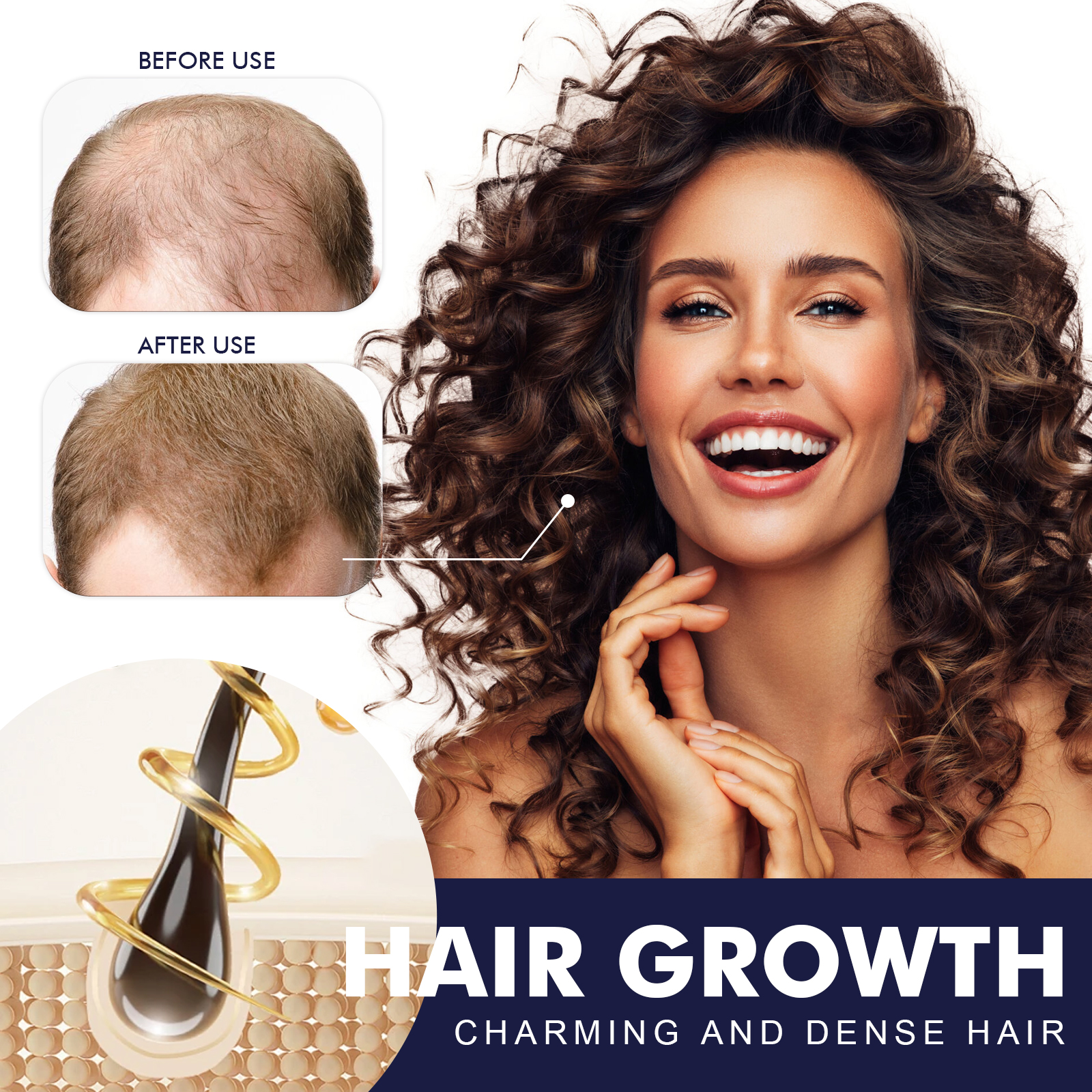
At month four post-radiation, my dermatologist cleared me to start topical treatments. We decided on a cautious approach: 2% minoxidil (not 5%) applied once daily to the radiation field, to minimize irritation to the still-sensitive skin. I also used aloe vera gel as a soothing base. My dermatologist explained that the follicles in the radiation field were likely damaged but not necessarily destroyed, and that lower-dose minoxidil might stimulate recovery without overwhelming the compromised tissue.
I supplemented with 5000 IU vitamin D3 (my level was 12 ng/mL post-treatment), 1000 mg vitamin C for collagen synthesis, 2000 mg omega-3 fatty acids for anti-inflammatory support, and a high-protein diet. These were not specifically for radiation recovery but for general tissue healing and follicle support.
The timeline was slow — much slower than chemotherapy-related regrowth. Month four through six: no visible change. Month seven: tiny, fine, colorless hairs emerging in approximately 40% of the radiation field. Month nine: those fine hairs had grown to about half an inch and some were starting to pigment. Month twelve: roughly 50% of the radiation field had visible hair growth, though it was sparser and finer than my normal hair. Month sixteen: approximately 60% of the field had hair, with the central area (which received the highest dose) remaining mostly bare.

At eighteen months post-radiation, I have accepted that the central area of the radiation field will not regrow — the follicle stem cells in that zone were destroyed by the high-dose radiation. I have explored hair transplant options, and my dermatologist believes follicular unit extraction (FUE) from the non-radiated donor area is feasible, though the blood supply in the radiation field is compromised and graft survival may be lower than typical.
Key Takeaways and Recommendations
For now, I style my hair to cover the bare area — a side part and longer layers on the right side do a reasonable job. I also use a hair fiber product (Toppik) for the thinner areas, which makes a surprisingly significant difference in appearance.
The practical takeaways: Radiation-induced hair loss is different from chemo-induced loss and may be permanent depending on the dose. Give your skin time to heal before starting any hair growth treatments. Lower-dose minoxidil (2%) may be more appropriate for radiated skin than the standard 5%. Follicle recovery in the radiation field is slow — think months, not weeks. And consult with both your radiation oncologist and a dermatologist before trying any topical treatments on irradiated skin.
My hair is not fully back, and it may never be in the highest-dose area. But I am alive, I am cancer-free, and I have found ways to adapt. Hair matters, but it is not the only thing that matters.
One aspect of this journey that I have not seen discussed enough is the financial cost. Between dermatologist visits, bloodwork, prescription medications, over-the-counter supplements, and hair care products, I spent approximately $200-300 monthly on hair recovery. Insurance covered some of the prescriptions but none of the supplements or topical treatments. I mention this not to discourage anyone but to set realistic expectations — effective hair loss treatment is an investment, and budgeting for it is part of the process.
I also want to talk about the role of patience in a way that goes beyond the obvious “be patient” advice. True patience in hair recovery means accepting that you will have weeks where it seems like nothing is happening, weeks where things seem to be getting worse, and occasional weeks where you notice genuine improvement. The overall trajectory matters more than any single data point. I found it helpful to review my monthly photos rather than daily mirror checks — the progress was much more visible when viewed over longer intervals.
The social dimension of hair loss is something I underestimated. Comments from well-meaning friends and family — “Have you tried biotin?” or “My cousin used rosemary oil and it worked!” — while intended to be helpful, often felt dismissive of the medical complexity I was navigating. I learned to have a prepared response: “I am working with a dermatologist on a comprehensive treatment plan, and I appreciate your concern.” This was polite but also set a boundary that stopped the unsolicited advice.
I also found it helpful to be selective about who I shared my journey with. Not everyone deserves access to your vulnerability. I shared openly with my closest friends and family, selectively with colleagues, and not at all with acquaintances. This protected my emotional energy for the things that mattered — my treatment, my recovery, and my mental health.
One more practical point: I kept a detailed journal throughout my recovery, noting my treatment adherence, stress levels, sleep quality, and subjective hair assessments. Looking back, this journal was invaluable for identifying patterns — I could see that poor sleep consistently preceded increased shedding, and that the shedding always decreased about 4-6 weeks after a particularly good stretch of adherence to my protocol.
I want to address something that rarely comes up in hair loss discussions: the role of expectations. When I started treatment, I expected a linear improvement — steady, consistent progress toward full recovery. The reality was anything but linear. There were plateaus, regressions, and unexpected leaps forward. The path was more like a stock market chart than a straight line, and accepting this non-linearity was essential for my mental health.
I also learned to redefine success. My initial goal was full restoration to my pre-loss hair density. As the journey progressed, I adjusted this to meaningful improvement — hair that looked good, felt healthy, and allowed me to live without constant anxiety about my appearance. This adjusted expectation was not giving up; it was being realistic about what treatment could achieve while still appreciating the genuine gains I was making.
The comparison trap is another danger. Other people’s before-and-after photos on social media can be inspiring, but they can also be misleading. Lighting, angles, styling, and photo editing all affect how hair looks in images. Your real-life mirror under normal lighting is a more accurate gauge than anyone’s Instagram post.
One aspect of this journey that I have not seen discussed enough is the financial cost. Between dermatologist visits, bloodwork, prescription medications, over-the-counter supplements, and hair care products, I spent approximately $200-300 monthly on hair recovery. Insurance covered some of the prescriptions but none of the supplements or topical treatments. I mention this not to discourage anyone but to set realistic expectations — effective hair loss treatment is an investment, and budgeting for it is part of the process.
I also want to talk about the role of patience in a way that goes beyond the obvious “be patient” advice. True patience in hair recovery means accepting that you will have weeks where it seems like nothing is happening, weeks where things seem to be getting worse, and occasional weeks where you notice genuine improvement. The overall trajectory matters more than any single data point. I found it helpful to review my monthly photos rather than daily mirror checks — the progress was much more visible when viewed over longer intervals.
Internal linking suggestions: [Radiation Therapy Hair Loss: What to Expect], [Hair Transplant After Radiation: Is It Possible?], [Best Hair Fiber Products for Thinning Hair]