

How Microcurrent Therapy Stimulates Hair Growth
Microcurrent therapy delivers extremely low-level electrical currents (typically 1-1,000 microamps) to the scalp to stimulate cellular activity in hair follicles. This technology has been used in wound healing and pain management for decades, and its application to hair growth is backed by a growing body of evidence.
The Science Behind Microcurrent and Hair
Microcurrents work through several mechanisms:
- ATP production increase: Microcurrent stimulation increases cellular ATP (adenosine triphosphate) production by 300-500%, according to a landmark study by Dr. Ngok Cheng. ATP is the energy currency of cells, and hair follicles in the anagen phase are among the most metabolically active cells in the body.
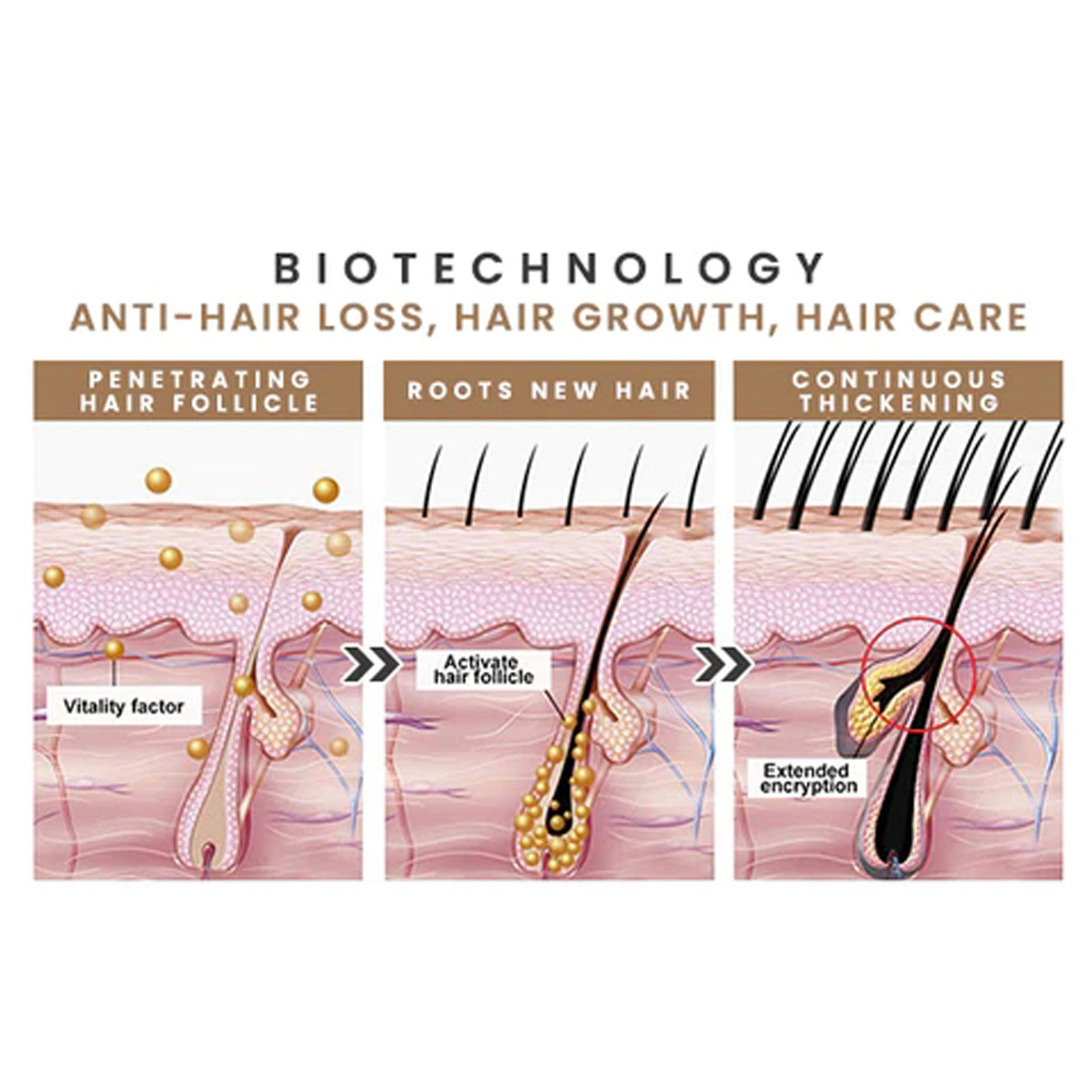
- Cellular membrane enhancement: Microcurrents increase cell membrane permeability, allowing more nutrients and growth factors to enter follicle cells.
- Angiogenesis stimulation: Microcurrent promotes the formation of new blood vessels (angiogenesis) in the scalp, improving nutrient delivery to follicles.
- Growth factor upregulation: Research has shown that microcurrent increases VEGF, IGF-1, and KGF expression in skin tissues — all critical growth factors for hair.
- Follicle cell proliferation: A 2020 study in Journal of Cosmetic Dermatology found that microcurrent treatment significantly increased hair follicle cell proliferation and extended the anagen phase.
Best Microcurrent Scalp Devices
1. Theradome LH80 PRO (Combined Laser + Microcurrent)
While primarily an LLLT device, the Theradome also delivers microcurrent stimulation alongside its 80 laser diodes. The combination of photobiomodulation and microcurrent creates a synergistic effect.
Pros: FDA-cleared, dual technology (laser + microcurrent), clinical evidence, hands-free Cons: Expensive; large helmet design; primarily marketed for LLLT benefits Rating: 4.4/5
2. NeuroMD Hair Regrowth Device
A dedicated microcurrent device designed specifically for scalp application. Uses targeted electrode pads that deliver customizable microcurrent frequencies to thinning areas.
Pros: Targeted microcurrent delivery, customizable intensity, dedicated scalp design Cons: Requires manual placement of electrodes; time-consuming setup; limited availability Rating: 4.0/5
3. NuFace Trinity + ELE Attachment
While primarily a facial toning device, the NuFace Trinity with its ELE (Eye and Lip) attachment can be used on the scalp for targeted microcurrent delivery. Many users report scalp benefits.
Pros: Versatile (face + scalp), trusted brand, easy to use, available at Sephora Cons: Not designed for scalp; small treatment area; requires conductive gel Rating: 3.8/5
4. Dermaroller with Microcurrent (Combination Approach)
Some users combine manual microneedling with a separate microcurrent device for enhanced results. The microneedling creates microchannels that improve microcurrent penetration.
Pros: Dual mechanism approach, customizable, cost-effective if you own both devices Cons: Not a single integrated device; requires two separate treatments; more time-consuming Rating: 4.2/5 (for the combined approach)
Comparison Table: Microcurrent Scalp Devices
| Device | Primary Technology | Microcurrent Type | FDA Cleared | Treatment Time | Price | |——–|——————-|——————-|————-|—————-|——-| | Theradome PRO | LLLT + MC | Combined | Yes (for LLLT) | 20 min, 2x/week | $595-895 | | NeuroMD | Microcurrent | Targeted electrode | No | 20 min, 3x/week | $200-300 | | NuFace Trinity | Microcurrent | Wand applicator | Yes (for face) | 5-10 min daily | $200-350 | | DIY Combo | Needling + MC | Separate devices | N/A | 30+ min | $100-200 |
How to Use Microcurrent for Hair Growth
Dedicated Device Protocol
- Clean and dry the scalp thoroughly
- Apply conductive gel (if required by the device)
- Place electrodes or device on thinning areas
- Run the device for the recommended time (typically 15-20 minutes)
- Use 2-3 times per week
- Apply topical treatments (minoxidil, serums) after microcurrent for enhanced absorption
- Expect 3-6 months of consistent use before visible results
NuFace Scalp Protocol
- Apply conductive gel to the scalp along thinning areas
- Use the ELE attachment on the lowest setting
- Glide slowly along the scalp for 5 minutes per area
- Focus on the hairline, temples, and crown
- Use 3-4 times per week
- Clean scalp thoroughly after treatment
Microcurrent vs. Other Device-Based Treatments
| Treatment | Mechanism | Efficacy | Time Commitment | Cost | |———–|———–|———-|—————–|——| | Microcurrent | Cellular energy + blood flow | Moderate | 15-20 min, 2-3x/week | $200-900 | | LLLT (Laser) | Photobiomodulation | Moderate-Strong | 15-20 min, 3x/week | $200-900 | | Microneedling | Wound healing response | Strong | Weekly | $10-50 | | LED Light | Photobiomodulation | Mild-Moderate | 10-15 min daily | $30-100 |
Who Benefits Most from Microcurrent?
- People who cannot use minoxidil or finasteride (medical contraindications)
- Those already on a comprehensive protocol who want to add a device-based component
- Women with diffuse thinning (microcurrent is particularly gentle and safe)
- Post-hair-transplant patients (to support graft healing and growth)
- People with scalp fibrosis (microcurrent can improve tissue health)
Buying Guide: What to Look For
- Specific microcurrent output — look for devices delivering 1-1,000 microamps
- FDA clearance — while not required for microcurrent, clearance adds safety assurance
- Treatment area coverage — some devices treat very small areas at a time
- Battery life — frequent recharging can reduce compliance
- Combinability — devices that work with topical treatments enhance overall results
- Return policy — microcurrent devices are an investment; a satisfaction guarantee is important
Final Verdict
Microcurrent therapy is a promising but still emerging technology for hair growth. The strongest evidence supports it as an adjunct to proven treatments rather than a standalone solution. The Theradome PRO offers the most comprehensive approach by combining LLLT and microcurrent, while the NuFace Trinity provides an accessible entry point for those already using the device for facial treatments. For best results, combine microcurrent with minoxidil or topical finasteride, and commit to at least 6 months of consistent use.
Internal links: Compare with LED hair growth brushes and laser devices compared.
Frequently Asked Questions About Microcurrent Devices
Does microcurrent therapy hurt?
No, microcurrent therapy is completely painless. The currents used are extremely low (1-1,000 microamps) — well below the threshold of sensation for most people. You should not feel anything during treatment. If you feel tingling, stinging, or discomfort, the device may be set too high or there may be poor contact with the scalp. Always start at the lowest setting and increase gradually. Devices that cause discomfort are likely using currents higher than true microcurrent range.
Can I use a microcurrent device with minoxidil?
Yes, and this combination may be particularly effective. Microcurrent increases cell membrane permeability and ATP production, which could enhance minoxidil absorption and follicle responsiveness. For best results, apply minoxidil after microcurrent treatment, when the scalp’s cells are most metabolically active. Wait 15-30 minutes after microcurrent treatment before applying minoxidil.
How does microcurrent compare to microneedling for hair growth?
Both treatments stimulate follicle activity, but through different mechanisms. Microcurrent increases cellular energy (ATP) and membrane permeability, while microneedling creates controlled micro-injuries that trigger wound healing growth factors. Microneedling has stronger evidence for hair growth and is significantly less expensive, but it can cause discomfort and requires a recovery period. Microcurrent is painless and can be used more frequently (2-3x/week vs. weekly for microneedling). For best results, alternate between both treatments.
Are at-home microcurrent devices as effective as clinical treatments?
Clinical microcurrent devices used by dermatologists typically deliver higher and more precise currents than at-home devices, along with professional electrode placement. However, consistent at-home use can still provide meaningful benefits, particularly as a maintenance treatment between clinical sessions. The key advantage of at-home devices is the ability to maintain a regular treatment schedule without the cost and inconvenience of clinical visits. For optimal results, combine periodic clinical sessions with regular at-home maintenance.
Deeper Dive
Photobiomodulation Mechanism: Red and near-infrared light is absorbed by cytochrome c oxidase in mitochondria, triggering increased electron transport, elevated ATP production, nitric oxide release (improving blood flow), and activation of transcription factors promoting cell survival and proliferation. Key parameters: wavelength (630-670nm red, 810-890nm NIR), power density (5-100 mW/cm2), and treatment time (10-25 minutes). LEDs operate at lower power density, requiring longer sessions than lasers, but are safer, cheaper, and more convenient for home use.
Related Searches
- microcurrent scalp device for hair growth before and after
- does microcurrent therapy work for hair loss
- NuFace for scalp hair growth does it work
- microcurrent vs LLLT for hair growth which is better
- ATP production microcurrent hair follicle stimulation
- best microcurrent device for thinning hair 2025