
Why Scalp Health Is the Foundation of Hair Health
A healthy scalp is the foundation upon which healthy hair grows. When the scalp is dry, itchy, or flaky, it creates an inflammatory environment that can disrupt the hair growth cycle, increase shedding, and make existing thinning more visible. Chronic scalp inflammation has been linked to follicle miniaturization in research by Trüeb (2018) published in the International Journal of Trichology, which noted that inflammatory infiltrates around hair follicles may contribute to the pathogenesis of androgenetic alopecia.
Scalp conditions are more common than most people realize: approximately 50% of adults experience dandruff at some point, and seborrheic dermatitis affects 3-5% of the population. For those with thinning hair, these conditions are both more visible and more consequential because an inflamed scalp is a hostile environment for hair follicles.
Identifying Your Scalp Condition
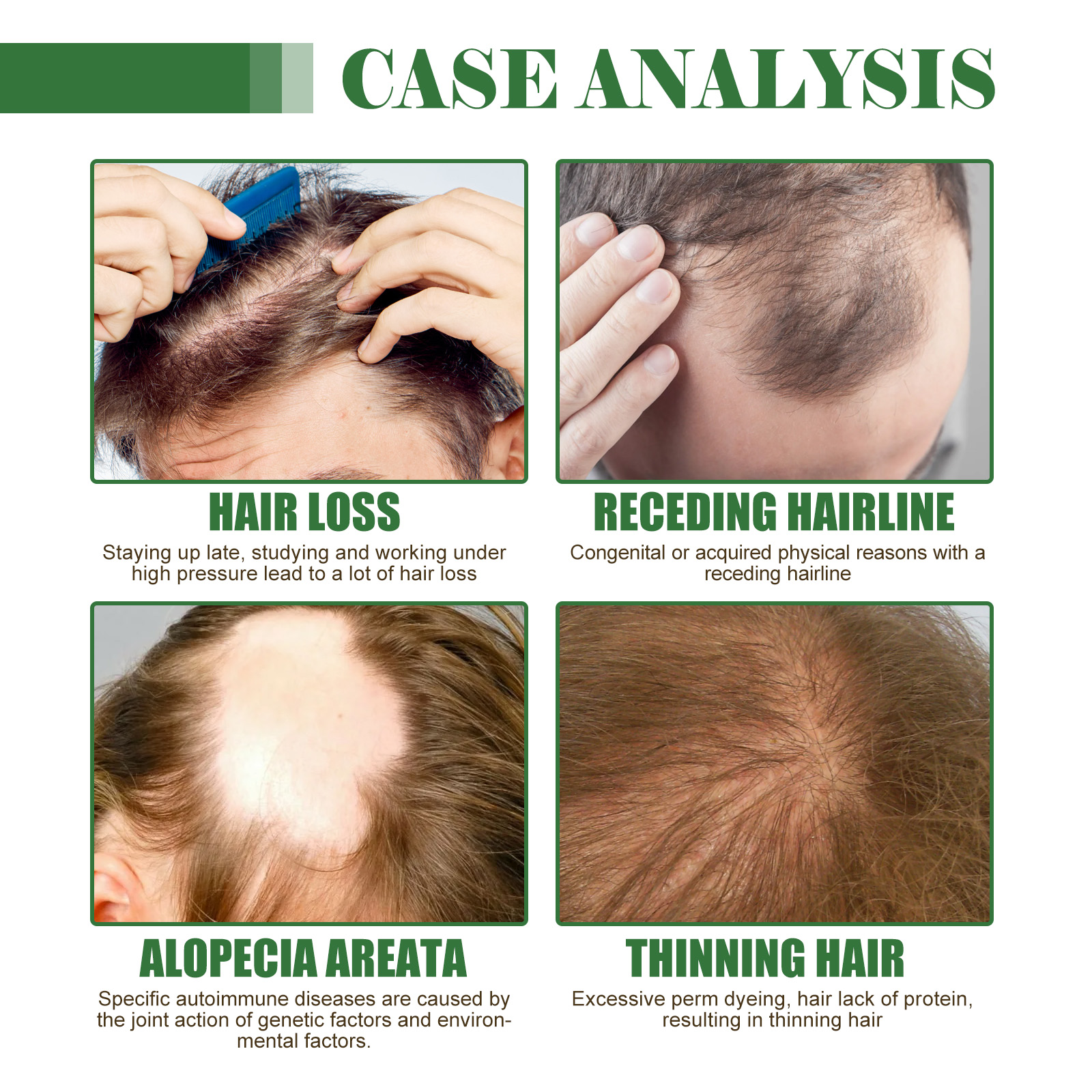
Dry Scalp: Characterized by small, white, dry flakes; tightness; itching that worsens in dry weather. Caused by insufficient sebum production, harsh shampoos, hot water, and low humidity. The flakes are small and fall easily from the scalp.
Dandruff: Characterized by larger, yellowish, oily flakes; mild to moderate itching. Caused by overgrowth of Malassezia yeast, which feeds on sebum and produces oleic acid that irritates the scalp. The flakes tend to be larger and may stick to the scalp and hair.
Seborrheic Dermatitis: A more severe form of dandruff characterized by red, inflamed, greasy patches with yellowish scales; moderate to intense itching; commonly affects the scalp, eyebrows, and sides of the nose. Requires medical treatment for effective management.
Psoriasis: Characterized by thick, silvery scales on red, inflamed skin; may extend beyond the hairline. An autoimmune condition that requires dermatological treatment.
Key Distinction: If your flakes are small, white, and dry, you likely have a dry scalp (treat with moisturizers). If your flakes are larger, yellowish, and oily, you likely have dandruff or seborrheic dermatitis (treat with antifungals). If your scalp is red and inflamed with thick scales, see a dermatologist.
Treatments for Dry Scalp
Kiehl’s Scalp Purifying Pyrithione Zinc Shampoo: $22 for 8.4oz. Contains pyrithione zinc (an antifungal and antibacterial agent) in a gentle, sulfate-free formula. The sulfate-free base prevents the over-stripping that worsens dry scalp, while the pyrithione zinc addresses any Malassezia component. Use 2-3 times per week.
Philip Kingsley Flaky Scalp Cleanser: $36 for 7oz. A targeted scalp treatment containing piroctone olamine (an antifungal) and exfoliating ingredients in a gentle, soothing base. Apply directly to the scalp, leave for 5-10 minutes, then shampoo out. Use 1-2 times per week until symptoms resolve, then reduce to once weekly for maintenance.
Juju Bar Scalp Serum with Hyaluronic Acid: $28 for 2oz. A hydrating scalp serum containing hyaluronic acid (attracts and retains moisture), niacinamide (reduces inflammation and strengthens the barrier), and glycerin (humectant). Apply to a clean scalp, massage gently, and leave in. Best for dry scalp without a significant dandruff component.
DIY Aloe Vera Scalp Treatment: Apply pure aloe vera gel ($6-8 for a large bottle) directly to the scalp, leave for 20-30 minutes, then shampoo out. Aloe vera has documented anti-inflammatory and moisturizing properties. A study by Surjushe et al. (2008) in the Indian Journal of Dermatology reviewed aloe vera’s pharmacological actions, including its moisturizing, anti-inflammatory, and wound-healing properties.
Treatments for Dandruff and Seborrheic Dermatitis
Nizoral A-D (1% Ketoconazole): $14.97 for 7oz. The most effective OTC antifungal shampoo for Malassezia overgrowth. Use 2-3 times per week, leaving the lather on for 3-5 minutes before rinsing. The ketoconazole kills Malassezia yeast and reduces the inflammatory response. For severe seborrheic dermatitis, a prescription for 2% ketoconazole may be necessary.
Neutrogena T/Gel Therapeutic Shampoo (Coal Tar): $8.49 for 4.4oz. Contains 0.5% coal tar, which slows the rapid skin cell turnover that causes flaking. Coal tar has been used for decades to treat psoriasis and seborrheic dermatitis. The primary drawback is the distinctive tar smell, which some users find unpleasant. Use 2-3 times per week.
Selsun Blue Medicated (2.5% Selenium Sulfide): $9.99 for 7oz. Selenium sulfide reduces Malassezia yeast and slows skin cell turnover. Effective for moderate to severe dandruff. Can cause hair discoloration in chemically treated or light-colored hair—perform a patch test first. Use 2-3 times per week.
Head & Shoulders Clinical Strength (2% Selenium Sulfide): $11.99 for 13.5oz. A higher-strength version of the classic Head & Shoulders formula with 2% selenium sulfide. More affordable per ounce than Selsun Blue and widely available. Use 2-3 times per week.
Prescription Options for Severe Cases
If OTC treatments are insufficient, dermatologists can prescribe: 2% ketoconazole shampoo, clobetasol propionate 0.05% topical solution (a potent corticosteroid for severe inflammation—short-term use only), fluocinolone acetonide oil (a mid-potency corticosteroid in an oil base), and calcineurin inhibitors (tacrolimus, pimecrolimus) for steroid-sparing long-term management. These require a prescription and medical supervision.
Scalp Care effective methods
Wash your hair regularly (every 2-3 days)—infrequent washing allows sebum and dead cells to accumulate, feeding Malassezia yeast and worsening dandruff. Use lukewarm (not hot) water—hot water strips natural oils and worsens dry scalp. Avoid scratching—scratching damages the scalp barrier, increases inflammation, and can cause secondary infections. Manage stress—stress triggers cortisol release, which increases sebum production and can flare seborrheic dermatitis. Protect your scalp from extreme temperatures and UV exposure.
Frequently Asked Questions
Q: Can dandruff cause hair loss?
A: Dandruff itself does not directly cause permanent hair loss. However, the inflammation associated with severe dandruff or seborrheic dermatitis can increase shedding (telogen effluvium) and, in some cases, contribute to follicle damage over time. Treating dandruff effectively may reduce this inflammatory shedding.
Q: Should I wash my hair more or less if I have a flaky scalp?
A: More—specifically, 2-3 times per week with a medicated shampoo. Many people with flaky scalps reduce washing frequency, thinking they are drying out their scalp. In reality, the flakes are often caused by Malassezia yeast feeding on accumulated sebum, and more frequent washing with the right shampoo is the solution.
Q: Are expensive scalp treatments worth the premium price?
A: For simple dandruff, Nizoral A-D ($14.97) is the most evidence-based and affordable option. Premium treatments like Philip Kingsley ($36) or Kiehl’s ($22) offer gentler formulations and more pleasant user experience, but the active ingredients that actually resolve the condition (ketoconazole, pyrithione zinc, selenium sulfide) are available at much lower prices.
The Gut-Scalp Connection: How Diet Affects Scalp Health
Emerging research suggests a connection between gut health and scalp conditions, particularly seborrheic dermatitis and dandruff. The gut microbiome influences systemic inflammation, immune function, and nutrient absorption—all of which can affect scalp health. A study by Clavaud et al. (2013) in the PLoS One journal found that patients with seborrheic dermatitis had different scalp microbiome compositions compared to healthy controls, with increased Malassezia restricta and Malassezia globosa colonization.
While the direct gut-scalp connection has not been fully elucidated, several dietary strategies may support both gut and scalp health: (1) Reduce refined sugar intake—Malassezia yeast feeds on sugars and lipids, and high-sugar diets may promote yeast overgrowth. (2) Increase omega-3 fatty acids (from fatty fish, flaxseeds, or supplements)—omega-3s have documented anti-inflammatory effects that may reduce scalp inflammation. (3) Include probiotic-rich foods (yogurt, kefir, sauerkraut)—probiotics support gut microbiome diversity, which may indirectly influence scalp health through immune modulation. (4) Stay hydrated—adequate water intake supports skin hydration, including scalp skin. These dietary strategies complement—but do not replace—topical scalp treatments for specific conditions.
Building a Scalp Care Routine: Morning and Evening Protocols
A consistent scalp care routine is more effective than sporadic intensive treatments. The morning protocol focuses on protection and preparation: (1) Gently brush or massage the scalp for 30 seconds to distribute natural oils. (2) Apply a scalp serum or treatment if using one (rosemary oil, minoxidil, or niacinamide serum). (3) Style as usual, applying UV protection if you will be outdoors. The entire morning routine takes 2-3 minutes.
The evening protocol focuses on treatment and repair: (1) Shampoo if washing today (follow the contact-time recommendations for medicated shampoos). (2) Apply a scalp treatment (exfoliant once per week, deep conditioning mask once per week, or daily treatment serum on other nights). (3) Apply minoxidil or other leave-on treatments. (4) Optional: 3-5 minutes of scalp massage before sleep to promote circulation and reduce stress. Consistency is the key—scalp treatments work through cumulative effects, and skipping days reduces their effectiveness. Set a phone reminder for the first month until the routine becomes habitual.
what matters most
Identify your scalp condition first: dry flakes need moisture (Kiehl’s Scalp Purifying Shampoo, $22; aloe vera treatment, $6-8), while oily, yellowish flakes need antifungal treatment (Nizoral A-D, $14.97). For severe seborrheic dermatitis that does not respond to OTC treatments, see a dermatologist for prescription options. Maintain a regular washing schedule (2-3 times per week), use lukewarm water, avoid scratching, and pair your scalp treatment with a gentle, sulfate-free shampoo on non-treatment days. A healthy scalp creates the optimal environment for whatever hair growth treatments you are using—addressing scalp issues should always be the first step in any hair care strategy.