

Why Hair Oils Deserve Serious Consideration
Among the most frequently discussed natural approaches for thinning-looking hair, three essential oils consistently appear in both traditional practice and emerging clinical research: rosemary, castor, and peppermint. Each oil works through a different mechanism, has a distinct evidence base, and requires specific application methods. Understanding these differences is needed for making an informed choice rather than following trending advice.
The global essential oil market for hair care exceeded $3.2 billion in 2025, yet most consumers purchase oils without understanding concentration requirements, carrier oil ratios, or the specific scalp conditions each oil addresses best.
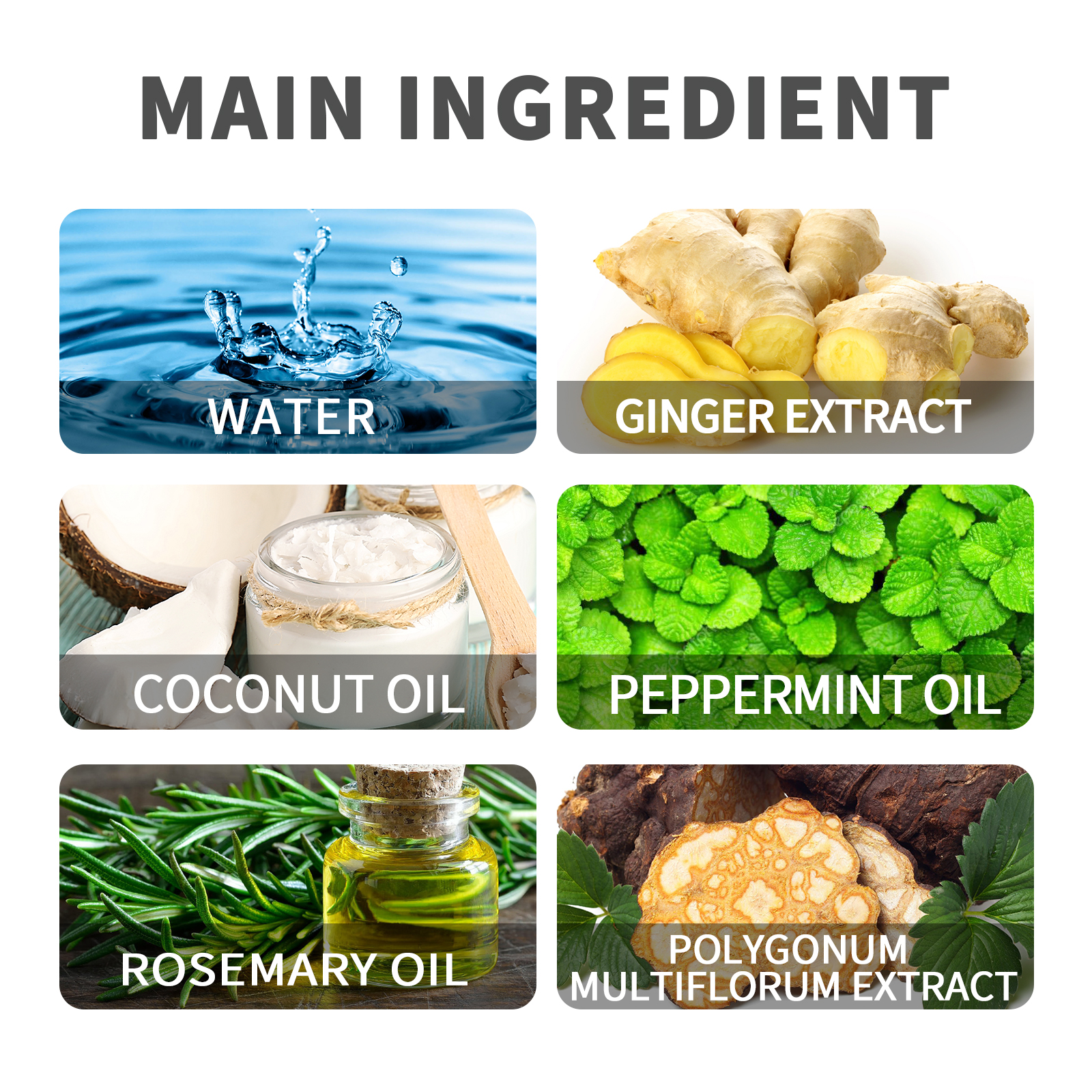
Rosemary Oil: The Most Clinically Studied Option
Rosemary oil (Rosmarinus officinalis) has the strongest clinical evidence among natural oils for supporting hair appearance. The important study by Panahi et al. (2015), published in SKINmed, compared rosemary oil to 2% minoxidil in 50 patients with androgenetic alopecia over 6 months. Both groups showed significant increases in hair count, with no statistically significant difference between the two. The rosemary group had fewer side effects—most notably, scalp itching occurred in only 4% of the rosemary group vs. 16% in the minoxidil group.
Mechanism: Rosemary oil contains carnosic acid and rosmarinic acid, which have been shown in laboratory studies to inhibit 5-alpha-reductase, the same enzyme targeted by finasteride. A study by Murata et al. (2013) in Phytotherapy Research demonstrated that carnosic acid reduced DHT production in vitro, though human clinical confirmation of this specific mechanism remains limited.
Application Protocol: Dilute 3-5 drops of rosemary essential oil in 1 teaspoon (5ml) of carrier oil (jojoba or argan recommended). Massage into the scalp 2-3 times per week, leave on for at least 30 minutes or overnight, then shampoo out. Consistency over 3-6 months is critical—the Panahi study evaluated results at 6 months, not sooner.
Top Products: Plant Therapy Rosemary Essential Oil ($8.99, 10ml, GC/MS tested), doTERRA Rosemary Oil ($22.67, 15ml, certified pure therapeutic grade), Majestic Pure Rosemary Oil ($9.99, 4oz, large volume option).
Castor Oil: The Thick, Nourishing Option
Castor oil (Ricinus communis) is unique among hair oils due to its exceptionally high ricinoleic acid content (85-90%), a monounsaturated fatty acid with documented antimicrobial and anti-inflammatory properties. Its thick, viscous consistency creates a protective coating around each hair shaft, which can temporarily improve the appearance of thickness and reduce breakage.
Evidence: Unlike rosemary oil, castor oil lacks direct clinical trials for hair growth. Its reputation stems from traditional use and mechanistic reasoning: ricinoleic acid has been shown to inhibit prostaglandin D2 (PGD2) in vitro, a compound associated with follicle miniaturization, according to research by Garza et al. (2012) published in Science Translational Medicine. However, this mechanism has not been validated in human trials with topical castor oil specifically.
Jamaican Black Castor Oil vs. Cold-Pressed: Jamaican Black Castor Oil (JBCO) is made by roasting castor beans before pressing, resulting in a higher ash content and slightly alkaline pH. Advocates claim the roasting process enhances the oil’s properties, though no peer-reviewed study has compared JBCO directly to cold-pressed castor oil for hair outcomes. Cold-pressed castor oil is lighter in color, has a milder scent, and retains more of the natural fatty acid profile.
Application Protocol: Apply a thin layer of castor oil directly to the scalp (no dilution required—it is not an essential oil and is safe for direct application) 1-2 times per week. Due to its thick consistency, mixing with a lighter oil like coconut or jojoba (1:1 ratio) makes application easier. Leave on for 2-4 hours or overnight, then shampoo out with a clarifying shampoo.
Top Products: Sky Organics Castor Oil ($9.99, 16oz, cold-pressed, hexane-free), Pura D’or Castor Oil ($12.99, 16oz, organic cold-pressed), Tropic Isle Living Jamaican Black Castor Oil ($10.99, 8oz, traditional roasting method).
Peppermint Oil: The Circulation Stimulator
Peppermint oil (Mentha piperita) is primarily known for its cooling sensation and vasodilatory effects. The most relevant study is Oh et al. (2014), published in the Journal of Toxicological Sciences. In a mouse model, 3% peppermint oil applied topically showed the most significant increase in follicle number, depth, and thickness compared to 3% minoxidil, saline, and jojoba oil controls after 4 weeks. The study found that peppermint oil increased IGF-1 (insulin-like growth factor 1) expression and promoted vascularization around follicles.
Important Caveat: This was an animal study. No human clinical trial has replicated these results, and the 3% concentration used in the study is significantly higher than what most commercial products contain. Peppermint oil should be viewed as a promising but unproven option for human hair care.
Application Protocol: Dilute 2-3 drops of peppermint essential oil in 1 teaspoon (5ml) of carrier oil. Never apply undiluted peppermint oil to the scalp—it can cause chemical burns and contact dermatitis. Apply 2-3 times per week, leave for 15-30 minutes, then wash out. The cooling sensation is normal, but discontinue if you experience burning, excessive redness, or itching.
Top Products: Plant Therapy Peppermint Essential Oil ($7.49, 10ml), Now Solutions Peppermint Oil ($8.99, 1oz, steam-distilled), Artizen Peppermint Essential Oil ($9.95, 1oz, GC/MS certified).
Head-to-Head Comparison
Evidence Level: Rosemary has the strongest human clinical data (Panahi 2015, 6-month RCT). Castor oil relies on mechanistic reasoning and traditional use. Peppermint oil shows promising animal data but lacks human trials.
Cost: All three oils are affordable. A 3-6 month supply of any option costs $8-15. Rosemary and peppermint oils require carrier oils (additional $8-12), while castor oil can be applied directly.
Ease of Use: Castor oil is the easiest to apply (no dilution needed) but hardest to wash out. Rosemary and peppermint require carrier oil dilution but wash out easily.
Side Effects: Rosemary oil has the fewest reported side effects in clinical trials. Peppermint oil can cause skin irritation if not properly diluted. Castor oil is generally well-tolerated but can cause contact dermatitis in rare cases.
Can You Combine These Oils?
Yes, many users combine rosemary and peppermint oils (2-3 drops of each in 1 teaspoon of carrier oil) for a dual-action approach—rosemary for its 5-alpha-reductase inhibition and peppermint for its vasodilatory effects. Castor oil can be used on alternate days as a deep-conditioning treatment. However, do not apply all three simultaneously, as this increases the risk of scalp irritation without evidence of additive benefit.
Frequently Asked Questions
Q: How long before I see results from rosemary oil?
A: The Panahi (2015) study evaluated results at 6 months. Realistic expectations suggest visible improvement after 3-6 months of consistent 2-3 times weekly application. Results will not appear in weeks.
Q: Can I use these oils with minoxidil?
A: Yes, but apply them at different times. Use minoxidil as directed (typically twice daily) and apply oils 4-6 hours apart to avoid interference with minoxidil absorption. Some users apply oils at night and minoxidil in the morning.
Q: Is Jamaican Black Castor Oil better than regular castor oil?
A: There is no clinical evidence that JBCO is superior. The roasting process may alter some properties, but whether this translates to better hair outcomes is unproven. Choose based on personal preference—JBCO has a nutty scent and darker color, while cold-pressed is milder.
Q: Can I leave rosemary oil on overnight?
A: Yes, when properly diluted in a carrier oil. Leaving it on overnight maximizes contact time. Protect your pillowcase with a towel or shower cap.
Oil Quality and Sourcing: Why It Matters
not every essential oils works the same. The chemical composition of rosemary oil varies significantly depending on the growing conditions, harvest time, and extraction method. A study by Takayama et al. (2016) in the Journal of Essential Oil Research analyzed 20 commercial rosemary oil samples and found that 1,8-cineole content ranged from 18% to 55%, and rosmarinic acid derivatives varied by up to 300% between samples. This means that two people using “rosemary oil” could be applying substantially different concentrations of the active compounds.
To ensure consistent quality, look for oils with GC/MS (gas chromatography/mass spectrometry) testing. Brands like Plant Therapy and Edens Garden provide batch-specific GC/MS reports on their websites, allowing you to verify the chemical composition of the specific bottle you purchased. Avoid oils that list “fragrance” or “parfum” on the ingredient label—these are synthetic fragrances, not genuine essential oils. Also be wary of extremely cheap oils (under $3 per 10ml), which may be adulterated with cheaper carrier oils or synthetic compounds.
what matters most
Rosemary oil has the strongest clinical evidence and is the recommended first choice for those seeking a natural option with human data behind it. Castor oil offers deep conditioning and may support a healthier scalp environment, but lacks direct clinical evidence for hair growth. Peppermint oil shows exciting preliminary results in animal studies but needs human validation. For best results, start with diluted rosemary oil applied 2-3 times weekly for a minimum of 3-6 months, and consider adding castor oil on alternate days for its nourishing properties.